Final Project Research Question Options

I can’t tell which question is the “best,” so here are a few that I’ll have picked by Monday.

Based on The Bluest Eye:

  • What is the definition of “beauty” in this novel and how does its standards affect each character in the novel?
  • How does Morrison portray blackness and sex as two things that directly and/or indirectly affect one another?
  • To what extent are Polly’s and Cholly’s actions excusable given their backstories?

Pretty (Ugly) Polly

Polly’s main insecurity that has lasted her her whole life is just one incredibly multidimensional feeling: the feeling of being ugly. Throughout her life, she encounters many moments, places, people, and practices that all sustain her by providing pleasure and returning respect. However, they also end up becoming the disruptions to her development with time. One of the first things that makes her feel this ugliness is her lame foot. However, Cholly is the first person in many years who treats her foot as an “asset” rather than as a “bad foot.” He seems to be the only person in her life who provides her the simple pleasure of feeling confident enough to think that she is deserving of a gentle love. Instead of being ignored, Polly finally has a chance to feel beautiful because of his love and support. 

However, this feeling is soon distorted when Cholly becomes more abusive and unattentive. Unfortunately, the same man who had made Polly feel so beautiful despite her deformity is the one who is now actively rooting against her attempts to make herself feel more physically beautiful, which can be seen when she tries to fit in with the other women in their new town. Cholly’s change in temperament can be seen through the way he chastises his wife for buying new makeup and clothes. His lack of support in Polly wanting to change herself is not one of a supportive husband who wants his wife to see the natural beauty within herself. Rather, he is only upset that she is wasting money to feed her desires. Through this, it can be seen that Cholly slowly loses the love that he once had for Polly, and that he no longer provides Polly the feeling of being worthy. Now, she is back to being “unworthy” and she is considered a waste of money.

The movies also provide Polly pleasure but, later on, contribute as a catalyst to her disrupted development. She describes her times at the movies as “…a simple pleasure, but she learned all there was to love and all there was to hate.” The things “she learned all there was to love” from the movies are all based on white femininity and beauty. She learns to love how white women look in films, the way that they are treated by their partners, and even the way their houses look; she learns to love all aspects of whiteness, which are the stark contrasts of her own black reality. Thus, by learning to love something so different to her own life is where she also learns “all there was to hate.” She learns to hate herself and the way she looks, the way that she is treated by her partner, and the way her house looks, which can be seen when she says, “them pictures gave me a lot of pleasure, but it made coming home hard, and looking at Cholly hard.”

 Additionally, the movie theater is also where Polly experiences a pivotal moment of feeling true ugliness: her front tooth falls out. This moment is critical to her disrupted development, and the irony of her situation is what makes her feel so hopelessly ugly. Before her tooth falls out, Polly is growing more aware of her ugliness, but she still has hope, which can be seen when she tries to improve her appearances by doing things such as dressing up to the movie theater as one of her favorite white actresses who she regards as very beautiful. So, it is when she is feeling her best when she finally ends up realizing that she could never be beautiful with her tooth missing. Polly is finally defeated, which can be seen when she un-pins her hair because she realizes that her ugliness can never be fixed.

The love for whiteness that she learns from the movies then becomes ingrained into her life when she starts working for the Fishers. Here, she is able to be around everything she learned to love, which provides her with both pleasure and power. She is not only able to enjoy her hobby of rearranging rooms, but she is also able to gain the respect of white people when she is around the Fishers. However, this site of pleasure and power only applies when she is with the Fishers; there are no other people in her life who tell her that they would never get rid of her, even if they only refer to Polly as a servant they would never get rid of, rather than a friend or family member. It is still where Polly feels most beautiful and wanted, which are the feelings Cholly is no longer able to give her, both because of his abuse and the aforementioned hate that Polly learned in the movies. 

This hate, however, does not just translate to her relationship with Cholly – it also translates to her relationship with her own daughter. This can be seen by the contrast in behavior between Polly and the little Fisher girl and Polly and Pecola. When Claudia and her sister visit Pecola, Polly comforts the little Fisher girl rather than comforting Pecola, who is crying out in pain. She acts very motherly to the white girl, which is a characteristic that has never been observed by the reader before. To her own daughter, however, she yells at her and even physically handles her and tells her to leave the house, as if Pecola is an intruder rather than her own child. This contrast is further sharpened when it is revealed that this pie was actually baked by Pecola for the Fishers; clearly, Polly had never baked her own family this pie, which can be seen by Pecola’s initial curiosity towards it. Thus, to Polly, her own family, and even Polly herself, are too “ugly” to be deserving of these beautiful pies; only the beautiful white Fishers with the beautiful house are deserving of them.

The Provos are Mirrors

In Ralph Ellison’s Invisible Man, the narrator (literally) stumbles upon what he first describes as “a lot of junk waiting to be hauled away” on a sidewalk. However, he soon realizes that this pile is not junk – it is a pile of a dispossessed couple’s possessions that only keeps growing as the cops haul more “junk” out of their apartment. As the scene unfolds and the narrator goes through the couple’s possessions, it is clear that the Invisible Man is directly able to take things outside of the groove of history and get them in, even though it is also evident that he does not necessarily want to, based on his findings and the impassioned speech he gives to the crowd watching the eviction.

It can be seen that there was a reason why it was so easy for the Invisible Man to mistake the couple’s possessions as trash. He describes what he sees at surface level as very old, random, and perhaps even useless, items: a beaten up chest of drawers, old musical instruments, and tattered signs and posters ripped from magazines that had been hung up on the walls. From just these items, it is nearly impossible for the Invisible Man to relate this eviction to history. However, as the Invisible Man goes deeper into the items, he finds a photo of the couple from when they were young, and describes their facial expressions as people  who “expected little, and this with a grim, disillusioned pride.” Here, the reader can start to feel the Invisible Man connecting the dots to a key piece of history that this novel is themed around: racial discrimination. Throughout the novel, the Invisible Man is plagued with experiences with racism, but this photo is an actual depiction of what it feels like to be black in America. Even though this picture was taken decades ago, the narrator seems to become aware that this feeling of “expecting little” has not changed for black people in each generation. Thus, there seems to be a direct correlation for black people in America when it comes to “expecting little;” they expect little because what they actually own does not accumulate to much, which can be seen through what the Provos actually own. What they expect is, unfortunately, their realities. And, perhaps, the Invisible Man feels as if the younger version of the Provos in the photograph is like looking into a mirror.

This feeling is confirmed and the Invisible Man is fully able to take things “outside of the groove of history” and get them in when he finds a seemingly useless piece of old, yellow paper on the ground –  Primus Provo’s freedom papers. It is clear now, that at least one of the people being evicted had been a slave, which directly ties in not just racism, but also slavery, into the narrator’s revelations. The Invisible Man states, “My hands were trembling… It has been longer than that, further removed in time, I told myself, and yet I knew that it hadn’t been.” This shows the Invisible Man’s internal struggle when it comes to accepting the fact that he is still facing the direct effects of racism, but is now able to contextualize it into a much more “historical” way; and yet, despite the fact that slavery is “history,” he knows that, in reality, this piece in time has never truly ended. The narrator knows that he, himself, is just a continuation of this story. It should also be noted that something so significant – the freedom of a black man – is something that, physically, looks so small and insignificant. The black man’s freedom is represented in this story as a tattered, old, yellow piece of paper that was thrown onto the ground by the white man. It is something that could have been mistaken for garbage.

He then details this story to the audience that has gathered to watch this eviction. “‘Dispossessed’! ‘Dispossessed,’ eighty-seven years and dispossessed of what? They ain’t got nothing, they never had nothing. So who was dispossessed?” The Invisible Man is now outwardly taking things “outside of the groove of history” and getting them in, even though he does not mention the fact that Mr. Provos had once been a slave. This can be seen by the fact that the narrator plays on the fact that the Provos have had nothing then, and clearly, nothing now. He shows the audience through this line that although the Provos’ status has changed from “slaves” to “free” Americans, one crucial aspect has remained the same: the white man is still in control of the black “free” man, as the white cops physically evict the couple.

Finally, it is also interesting to note that both the audience and the narrator refer to each cop as “the white man” and everyone else in this scene as “the black man.” Clearly, the presence of the cops has a deeper meaning than government officials simply executing the law because they were ordered to evict the Provos. This eviction is an allusion to slavery in itself – the white man will always be in full control of the black man’s life, regardless of how many years have passed since a black man’s “freedom” was obtained. A black man’s freedom clearly is still not enough for him to stop a white man from stripping away everything the black man owns.

The Modern Day “Everyone’s Protest Novel”

Harriet Beecher Stowe’s “Uncle Tom’s Cabin” is a historically famous novel – not just because it was subjectively a “good” read, but because it is what many consider to be the anti-slavery novel that laid the groundwork for the Civil War. Based on its impact, one would come to assume that no one would ever be able to criticize this book because of the effects it had on the attitudes of slavery in the 1800’s, and the effects it still has today. Wouldn’t a criticism on this novel be considered a little… racist? 

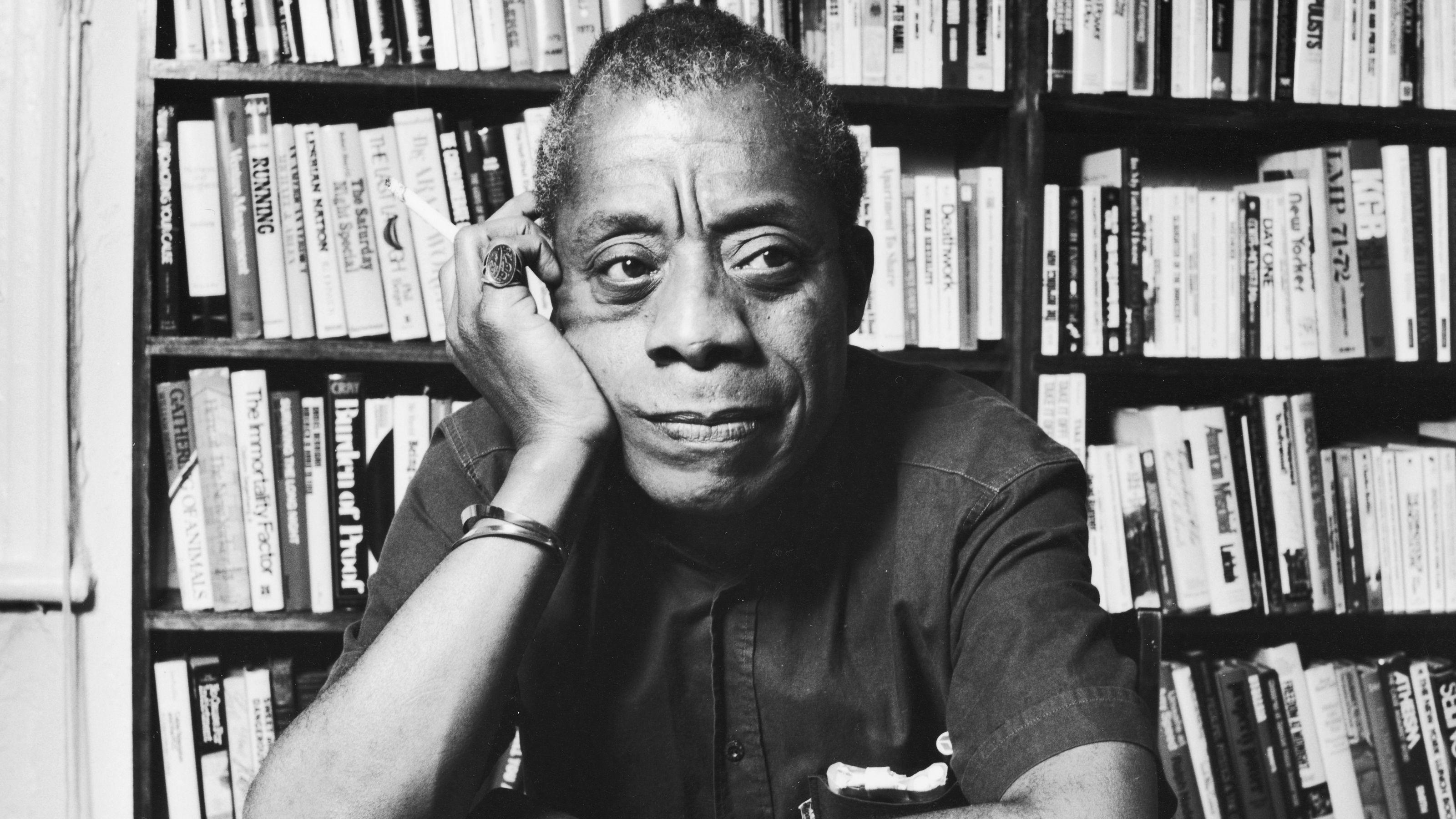
James Baldwin, a black writer from Harlem, was able to effectively criticize “Uncle Tom’s Cabin” with his own essay, “Everyone’s Protest Novel.” In it, he goes in depth as to what makes this novel so controversial. At one point, he compares the novel to white missionaries going on a trip to Africa. This shows that Baldwin thinks of this novel to be some type of “charity work” that is almost unnecessary. Rather than these white missionaries being able to truly help people in Africa, the only thing this really establishes is the fact that these white missionaries not only feel better about themselves for “helping” others, but also that they end up creating a framework of white people being superior to black people. The “what” of their mission trumps the “why” – which is what Claudia Rankine elaborates upon in her writing in “On Whiteness and The Racial Imaginary.”

Rankine writes, “Are we saying…  white writers can’t write black characters? That no one can write from a different racial other’s point of view? We’re saying we’d like to change the terms of that conversation, to think about creativity and the imagination… So, not: can I write from another’s point of view? But instead: to ask why and what for, not just if and how. What is the charisma of what I feel estranged from, and why might I wish to enter and inhabit it.” This means that rather than just absentmindedly write and feel, for some reason, “inspired” to make your character black as a white author, ask yourself, “what is the true purpose of making this character black?” If the author makes this character black, would this be diminishing the character into someone who is simplified into just a “black” person for the white person’s benefit, as Baldwin mentions in his writing? Would the character’s full reality as a black person be elaborated upon, or would the character’s race just add onto the reduction of actual peoples’ realities for the sake of making another (failed) protest novel? In combining the criticisms of both Rankine and Baldwin we learn to think more about how labeling a character as a person of color can be performative in nature and, more importantly, demeaning to real people; there is a line that must not be crossed in order to not make these errors.

However, this begs the question, what is the “line” that white writers cannot cross? What is the universally acceptable answer to the “why and what for” that Rankine mentions? If one person of color accepts the explanation, but another does not, should the black main character and his or her character development and struggles created by the white author be erased from the novel? While creative writing should not necessarily have boundaries, perhaps Claudia Rankine’s next steps could be to lay out a definite framework as to what is and is not acceptable for people to write about when it comes to creating a character of a different race – and perhaps someone will write another critical essay on her standards as well.

James Baldwin 1968 Interview on Race in America After Death of Martin  Luther King Jr.

The Souls of Black Folk (Have Yet to be Unveiled)

W.E.B. Du Bois’ “The Souls of Black Folk” is critical in the understanding of racism that black people experienced during his time period. He explains the emotions and aspirations black people felt both before and after the Emancipation, and delves into what systematically put his people into the same cycle of wanting freedom – even when it appears to the average White man as something that black people have already attained. However, to a reader in the present day, it may seem as if the tribulations Du Bois explains in depth may simply be problems in the past. After all, how could they not be when we have progressed so far as a country where it is now unacceptable to outwardly discriminate against black people? This belief is merely a fallacy – black people must still continue to seek freedom in the exact respects that Du Bois mentions in his literature more than a century later.

There are many people who think that outward racism ended when the Emancipation Proclamation was drafted, and Du Bois touches upon this mindset that many black people during his time period also shared. He states, “to him, so far as he thought and dreamed, slavery was indeed the sum of all villainies, the cause of all sorrow, the root of all prejudice; Emancipation was the key to a promised land of sweeter beauty than ever stretched before the eyes of wearied Israelites.” This shows the ignorance (that stemmed not from lack of knowledge, per se, but rather, from pure hope) that black people around the time of Emancipation had in respect to where they thought racism came from. They held the belief that it was the mere act of enslaving black people that caused the prejudice against them, and that the one definite way to get rid of this prejudice was to simply ban slavery. Once this happens, America should truly be the land of the free, right?

However, Du Bois explains that this attitude was all too optimistic and goes in depth about the true sources of intolerance. It comes from the paradox of the black man getting a taste of education to a certain degree. Once the black man feels a sense of self-realization, he starts to compare his own poverty to his rich White neighbors. He starts to compare his (forced) lack of education to the common knowledge of business, life, and humanities that is only attainable to his White neighbors. And yet, even with this realization, black people are unable to move forward because the clearly Emancipation did not solve anything beyond the literal breaking of the black man’s shackles. He is still plagued by the racist attitudes of his White counterparts who will not allow black people to move further up in society.

While black people are allowed basic rights now, such as the right to vote and the right to get an education, it is imperative to realize that what Du Bois describes in his writing still applies today. Racism still exists in the forms of redlining neighborhoods, providing insufficient funds to these neighborhoods that leads to the lack of education, and over policing. As Du Bois states, “work, culture, liberty,—all these we need, not singly but together, not successively but together, each growing and aiding each.” The laws we have put in place simply do not allow for this cohesion that will ultimately lead to true freedom – it is what forces black people to continue to seek more freedom to this day.


“The Nation has not yet found peace from its sins; the freedman has not yet found in freedom his promised land.”
