Paralyzed


Paralysis occurs when you lose a function in an area of your body, or even your entire body. Your muscles slowly wither away. Physical therapy can help prevent muscle deterioration, but it still doesn’t help with your mobility most of the time. In Frantz Fanon’s “The Fact of Blackness” he speaks of his anger towards the world that view him as ‘the other”,  he shows anger to the fact that the world judge him based on his color,  shows anger to the world that views him as something “wrong”; because he is a black man in a white man’s world. And Fanon also shows sadness, sadness because the world he lives in won’t change, at least not in his lifetime. The white man’s world paralyzed him in every aspect possible, paralyzed in his mind to be subjected as only  a “negro”, paralyzed because of the box bestowed to him from birth. That he must act on the basis forced upon him and only them.


Fanon starts out straight to the point stating  “‘Dirty N*****!’ Or simply, ‘Look, a negro!’ I came into the world imbued with the will to find the meaning in things, my spirit filled with the desire to attain to the source of the world, and then I found that I was an object in the midst of other things,” (Fanon, p.1). Here, Fanon illustrates how in a white man’s world all that they see is a negro, but Fanon criticizes that, he questions it because he knows it isn’t right. Because why is it right that a person can be stripped of their humanity and described as an object because of their skin color? Fanon shows dreams and aspirations, but you see that he comes to a realization that those dreams are blocked because of how the world views him. Fanon states “My body was given back to me sprawled out, distorted, recolored, clad in mourning in that winter day. The Negro is an animal, The Negro is bad, the Negro is mean,” (Fanon, p. 3). Fanon illustrates descriptions that were put into people just because they have a dark complexion. No one is born with these thoughts; it was society that put those conceptions in place. Similar to Du bois he explains his confusion on how it is possible that he is a problem he states  “And yet, being a problem is a strange experience, peculiar even for one who has never been anything else,”(Dubois). Fanon, states how the white man’s world views black people, but he repeats these words as if he knows deep down they’re wrong. As he waits  for someone to say that he is beautiful, that he is a person, and everything that makes him who he is, makes him good. 


Fanon constantly tries to show that his color doesn’t define him, but society wants to put him in that box. It wants to keep him there because that’s where he should be. Fanon states “ The crippled veteran of the Pacific war says to my brother, ‘Resign yourself to your color the way I got used to my stump; we’re both victims.’ Nevertheless, with all my strength I refuse to accept that amputation. I feel in myself a soul as immense as the world, truly a soul as deep as the deepest of rivers, my chest has power to expand without limit. I am a master and I am advised to adopt the humility of the cripple…I wanted to rise, but the disemboweled silence fell back upon me, its wings paralyzed. Without responsibility, straddling Nothingness and Infinity, I began to weep,”(Fanon, p.9). This illustrates that Fanon wants to fight the prejudice, he wants to be able to prove to the world that he is more than his color, he can soar into the sky and accomplish the unlimited because he can. But the world, and even some black people want him to accept the world for what it is, and stay in the box so we don’t become a problem. Fanon later weeps in defeat, because no one was there to tell him that he doesn’t have to stay in the box, he’s trapped; he’s paralyzed. 


Have you ever seen a caged bird? People have birds to look at them, stand still in that cage; paralyzed. Clip their wings to prevent them flying; so they can sit and sing for them. The bird does the same thing every day, 

“good bird”.

You’ve never allowed the bird to fly for so long that when it does you get surprised. 

“It’s soaring!It’s flying! Look it’s flying!” 

It continues to fly, it flaps its wings, it breathes the air of freedom, and it continues to fly. 

“Wait! Come back!” 

The bird continues to fly. The next week, you get a different bird and you put it in the cage,

 “This time you won’t leave.”

Whiteness, The Racial Imaginary, and American Dirt

In “On Whiteness and the Racial Imaginary”, authors Claudia Rankine and Beth Loffreda discuss the tension between writers and their attempts to interact with race in their storytelling. In their opening paragraph, the writers jump into the conversation by listing examples of what ‘tropes’ one might find in writings about race, such as the exotification and othering of racialized characters. They also mention the spectrum of race that is often ignored in favor of a Black/white dichotomy. 


The authors go on to interrogate the white imagination, specifically as it is often a space considered to be free of race and yet qualified to conceive of racialized experiences outside of the creative’s mind. The authors clarify that the imagination is in fact informed by the real world, therefore a character of color cannot be written by an author without embodying the author’s own impressions of that character’s race or perceived experience. This place of imagination is not afforded to authors of color whose work cannot escape their real-world racializations; while an author of color’s race will always be tied to their work, a white author can speak from a place of universality.


The writers go on to address how it is difficult to write even of one’s own experience and that it can often be difficult to read about how a white author perceives you or someone of another race, and I think what this is getting at is that white voices are often seen as a sort of law, where their characters of color go on to influence the perceptions of that race, but then once perceived by real-world people of that experience they cause a sort of questioning of oneself.


The authors go on to give a hypothetical example of a white author getting upset and misunderstanding the ‘wounds’ that they are witnessing, and I think a real-world example of this would be Jeanine Cummin’s book ‘American Dirt’, which was widely talked about at the beginning of the year. In this novel, which Cummins claims to have researched for over 7 years, the fictionalized story of a Mexican woman and her son crossing over into the US is told. Historical and linguistic discrepancies aside, the book was particularly controversial because the author acknowledged in the text that she wishes someone “slightly browner” than she had told the story. Additionally, although the writer had previously considered herself white with no Latinx heritage, she began to identify herself as Latina by way of a Puerto Rican grandmother. As the controversy surrounding the book grew finally it was revealed, perhaps to gain sympathy, that her husband was an undocumented immigrant, therefore allowing her to write about the experience. Of course, it was later discovered that her husband is from Ireland, and although he may very well be undocumented, that experience is completely different from someone coming from Mexico.

I think it’s interesting to note how rather than defending her role as a writer to tell whatever story she wants, the author tried to establish points of relatability to the story that she published and I think with this example, it’s important again to note that the author herself acknowledges that there are opportunities to tell stories but they don’t go to people who are “slightly browner”, they go to people like Jeanine Cummins.  As Rankine and Loffreda state. perhaps it is not the question of “can I write from another’s point of view? But instead: to ask why and what for, not just if and how.

Individuality and Marginality

Sometimes, I feel discriminated against, but it does not make me angry. It merely astonishes me. How can any deny themselves the pleasure of my company? It’s beyond me,” ~ Hurston 

Before I begin, I like to say this was an enjoyable read. The passage is brimming with personality that is filled with sarcastic undertones from Hurston. This feeds into the greater theme of the story of individuality that the author feels are crucial against being marginalized. Hurston is a beam of joy in a comparatively cruel time. This is not to say that she is blind to the obstacles in her path but rather enduring against them instead in a positive wayOne excerpt from the passage, “Got just as much pleasure out of the tourists as the tourists got out of the village. The front porch might seem a daring place for the rest of the town, but it was a gallery seat for me” (Hurston). This is where Hurston showcases her fierce personality against the general fear that the community holds. Instead of being timid, she would rather go out and interact with strangers. Even though the strangers implored a grotesque caricature of a black child for their own humor. Hurston however does not seem to mind the strangers as they gave her money for her dances. Her own personality out shown those of her community and the strangers in an admirable way.  

As Hurston grows up, she becomes more aware of the issues that clouds over her community. Yet, she is never pulled into this dark cloud of depression as she points out. As Hurston says it best, “quite exciting to hold the center of the national stage, with the spectators not knowing whether to laugh or to weep” (Hurston). Hurston is optimistic about her future and sees her own potential in the country. That will not be overshadowed by her ancestor’s past. While others may feel depressed being ancestors of a slave, Hurston sees this as a way to prove herself and her worth. 

Yet, there are moments when Hurston feels alienated because of her color. Especially when there is a sharp contrast between her and the people around her. One scene that describes this the best is when Hurston goes to a jazz orchestra with her white friend. She wrote, “The great blobs of purple and red emotion have not touched him. He has only heard what I felt. He is far away, and I see him but dimly across the ocean and the continent that have fallen between us. He is so pale with his whiteness then and I am so colored” (Hurston). While this is the deepest contrast in her story between her and white people. It seems to be one overshadowed by her next paragraph. She describes a moment of no race and just a pure being. One that relates to everyone and part of only one race, the human race. She is still optimistic about the futureShe sees life in a cheerful manner and at the end of the day, that’s what life should be about. 

Fact of Blackness

     The “Fact oF Blackness” by Frantz Fanon focuses  on racism from a Negro man’s perspective. He speaks about how the Negro man views himself and his native people. Based on the reading  the negro man has no  sense of self worth. It is for this reason he seeks to find validation and  a sense of identity. However, when placed among his own people he is still lost . This is because  they themselves are conformed to the reality of the white man. He believes that the negro contributed to the subjection by trying to fit into the white man’s world . This can be seen as he makes  reference to speaking a language as the art of colonization. With the intention of the reformation of the negro man to a more sophisticated being . He believes by doing so they would be judged not by the color of their skin but for their intellect. However, to be black and speak with perfect diction is still to be black. In addition , marked as special, unique, and surprising. He refers to this as the black skin with a white mask .
To be a negro is to be nothing. Fanon was right when he stated instead of finding the meaning to existence he realized he was just an object (para1).The negro is everything else but a man. He is seen as a toxic ,arrogant, animalistic and a problematic creature. Constantly miss understood in every way.  While on the other hand no one really even tries to understand the negro man. This is because his emotions are never regarded. It seems his sense of purpose is that of a slave and nothing more. No redemption no gratification no liberation. Instead, he is mentally imprisoned by all the hatred, pain and emotional trauma . Which he Inherited from ancestors and the present.
How can this race be liberated when they are still mentally enslaved. Being called a problem , and hated at the sight of their skin . Not seen for your worth but for a race you had no choice choosing. Who would not hate to be a negro. Why wouldn’t you try to be anything else but that. In the Last paragraph of the passage the negro tells lizzie he is guilty (pg 265). He does not know what crime he committed but he takes accountability. This is due to the fear that the negro man has existed under throughout his existence . I too would have taken the blame if I was in his place. It would seem the negro man is like a  stepchild . He constantly seeks to be loved and accepted by everyone around him. Sadly he does not seek love and acceptance in his self.
Which means for the negro man to be free, he has to find himself. The world can not define what they do not know. It is merely an opinion , nothing factual. As humans we create our own destiny. We have the power to change , build and destroy anything we put our minds to. In the famous quote of Bob Marley “emancipate yourself from mental slavery none but ourselves can free our mind.”

Zora the Brave

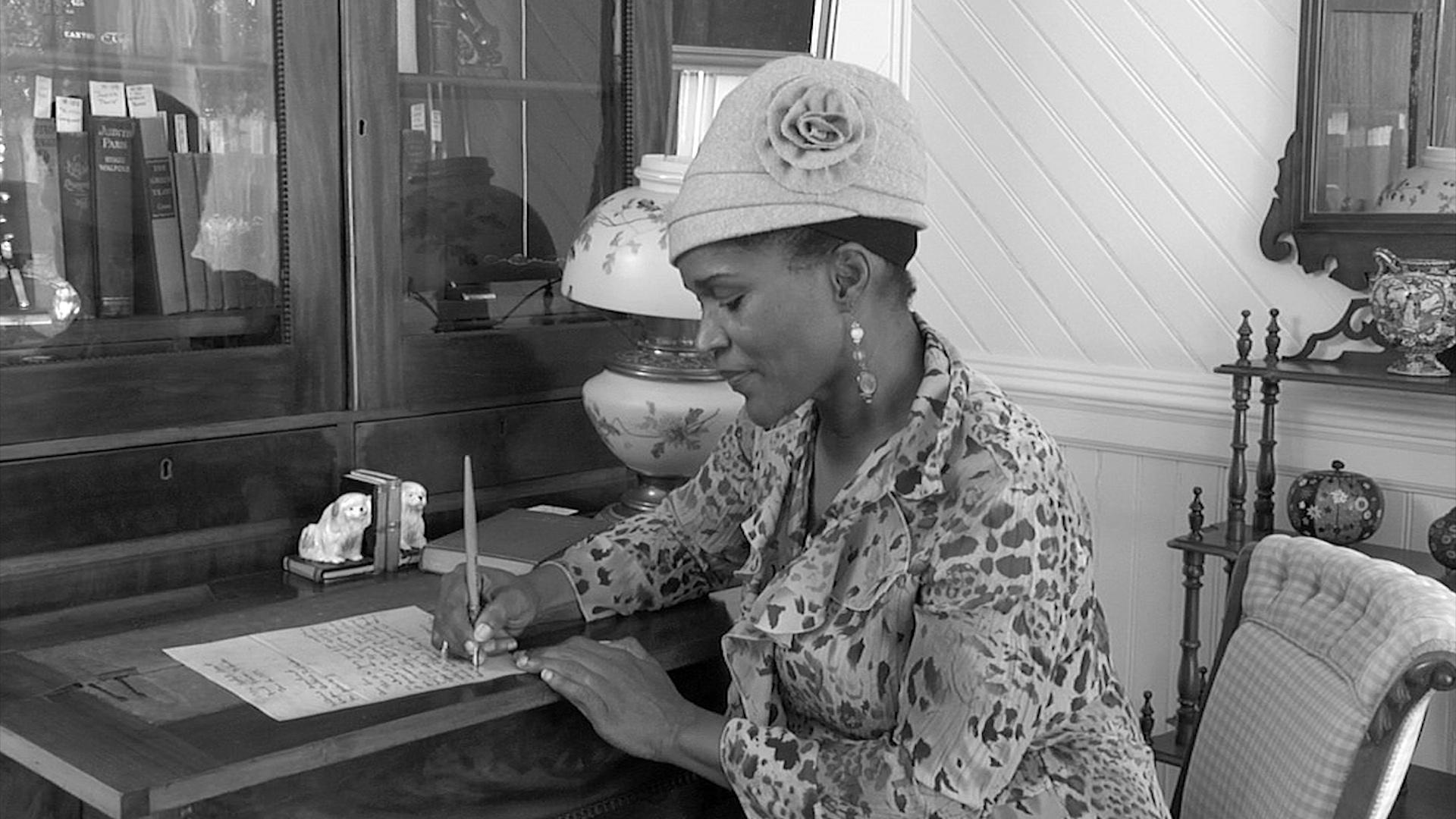
Like many authors, Zora writes about herself. As a Black person, she wrote about her own experiences and how she felt being black. In the beginning, she described her town and how it was “exclusively colored” (1). She mentioned how whites passed by her town and saluted her and sometimes they gave her some coins for singing and dancing. In her text she wrote “… and gave me generously of their small silver for doing these things, … the colored people gave me no dimes” (1).  Hence, white people are good in some ways. Not every white person is bad. Also, in her writing, she mentioned the difference between the native whites, the Southerners, and the Northerners. She stated “the native whites rode white horses, …. but the Northerners were something else” (1). In this passage, Zora wants to show the world especially whites that they came from the same race but still they are different from each other trying to remind them that it is okay to be different.

Her writing shows a lot of bravery. First, she stated, “BUT I AM NOT tragically colored” (1). Hence, she is telling everyone (the whites) that they could never hurt her because she was black. She is not like those who keep looking back and crying because of the oppression and slavery that their ancestors suffered from in the past. And that instead of feeling weak and helpless she is ready to do anything to face the world. Unlike other blacks, who think that slavery is still existing, Zora is telling the world that those days are over. According to Hurston “slavery is sixty years in the past” (2). For Zora, she thinks that her ancestors did what should be done to end slavery and she is not ready to go through that again instead she is always ready to face anything that could come up “I am too busy sharpening my oyster knife” (1). Another proof of her bravery is when she wrote “the position of my white neighbor is much more difficult. No brown Spector pulls up a chair beside me ….the game of keeping what one has is never so exciting as the game of getting” (2). This is a strong message to those who are in power who feel threatened all the time even while eating and sleeping. Hurston is saying that she has nothing to lose unlike politicians and rich whites who are afraid of losing their privileges in case blacks become powerful and rule the world.

Like Emerson, Hurston expressed her desire of looking forward and not to stick with the past. She argues “I do not be long to the sobbing school of Negrohood who hold that nature somehow has given them a lowdown dirty deal and whose feelings are all but about it” (1). Hurston does not want to remember the sad events because it will hold her back and prevent her from enjoying her life. Also, she stated “I belong to no race nor time. I am the eternal feminine with its string of beads” (2). Hence, she also got the transparent eyeball that Emerson wrote about. Through this eyeball, she could see only the positive things which allow her to live and enjoy her feminism.


Florida Frontiers | The Lost Years of Zora Neale Hurston | Season 1 |  Episode 106 | PBS