The Modern Day “Everyone’s Protest Novel”

Harriet Beecher Stowe’s “Uncle Tom’s Cabin” is a historically famous novel – not just because it was subjectively a “good” read, but because it is what many consider to be the anti-slavery novel that laid the groundwork for the Civil War. Based on its impact, one would come to assume that no one would ever be able to criticize this book because of the effects it had on the attitudes of slavery in the 1800’s, and the effects it still has today. Wouldn’t a criticism on this novel be considered a little… racist? 

James Baldwin, a black writer from Harlem, was able to effectively criticize “Uncle Tom’s Cabin” with his own essay, “Everyone’s Protest Novel.” In it, he goes in depth as to what makes this novel so controversial. At one point, he compares the novel to white missionaries going on a trip to Africa. This shows that Baldwin thinks of this novel to be some type of “charity work” that is almost unnecessary. Rather than these white missionaries being able to truly help people in Africa, the only thing this really establishes is the fact that these white missionaries not only feel better about themselves for “helping” others, but also that they end up creating a framework of white people being superior to black people. The “what” of their mission trumps the “why” – which is what Claudia Rankine elaborates upon in her writing in “On Whiteness and The Racial Imaginary.”

Rankine writes, “Are we saying…  white writers can’t write black characters? That no one can write from a different racial other’s point of view? We’re saying we’d like to change the terms of that conversation, to think about creativity and the imagination… So, not: can I write from another’s point of view? But instead: to ask why and what for, not just if and how. What is the charisma of what I feel estranged from, and why might I wish to enter and inhabit it.” This means that rather than just absentmindedly write and feel, for some reason, “inspired” to make your character black as a white author, ask yourself, “what is the true purpose of making this character black?” If the author makes this character black, would this be diminishing the character into someone who is simplified into just a “black” person for the white person’s benefit, as Baldwin mentions in his writing? Would the character’s full reality as a black person be elaborated upon, or would the character’s race just add onto the reduction of actual peoples’ realities for the sake of making another (failed) protest novel? In combining the criticisms of both Rankine and Baldwin we learn to think more about how labeling a character as a person of color can be performative in nature and, more importantly, demeaning to real people; there is a line that must not be crossed in order to not make these errors.

However, this begs the question, what is the “line” that white writers cannot cross? What is the universally acceptable answer to the “why and what for” that Rankine mentions? If one person of color accepts the explanation, but another does not, should the black main character and his or her character development and struggles created by the white author be erased from the novel? While creative writing should not necessarily have boundaries, perhaps Claudia Rankine’s next steps could be to lay out a definite framework as to what is and is not acceptable for people to write about when it comes to creating a character of a different race – and perhaps someone will write another critical essay on her standards as well.
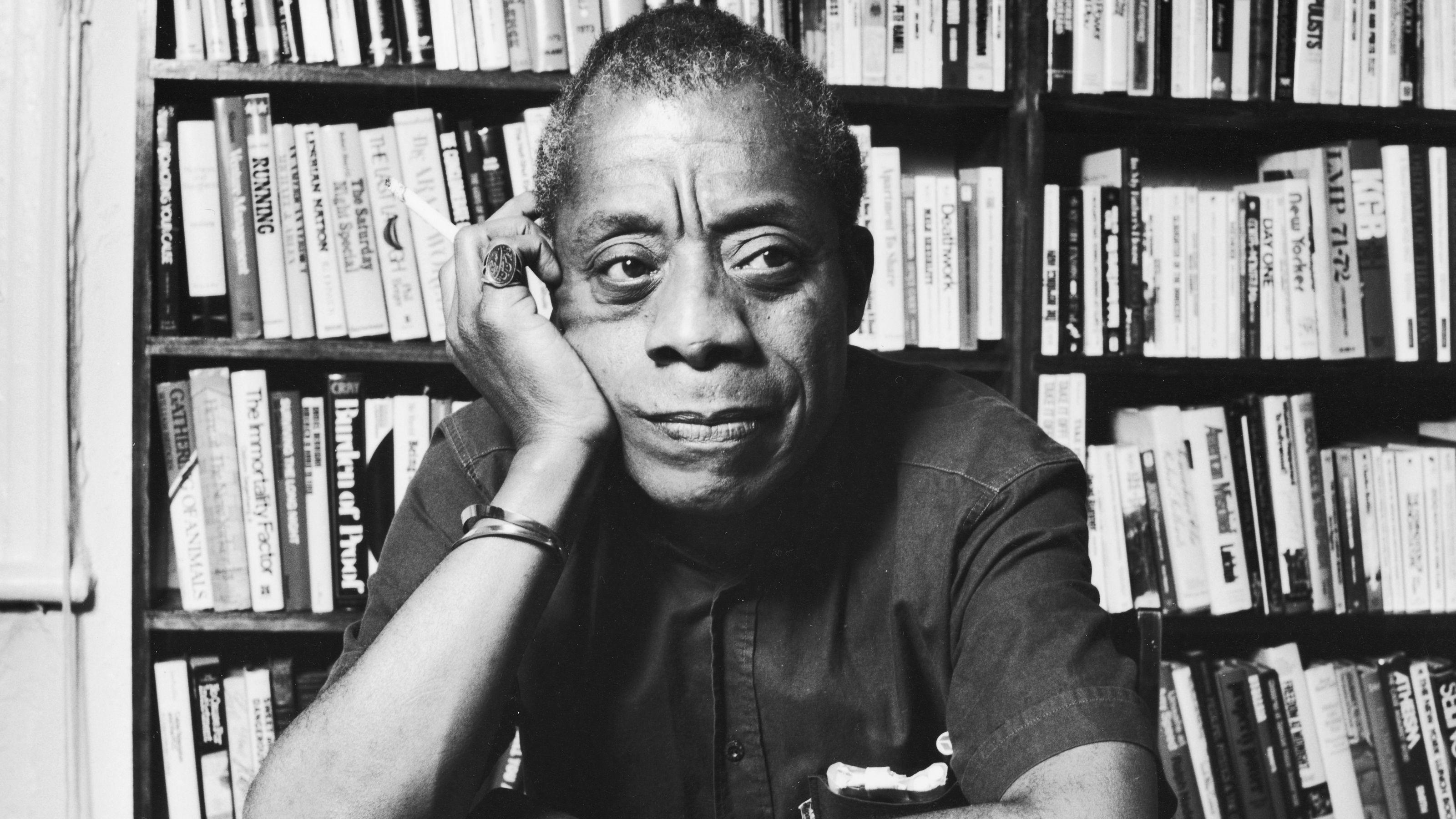
James Baldwin 1968 Interview on Race in America After Death of Martin  Luther King Jr.

Our Imaginations Are Creatures!

For many years and till this day our biggest challenge has always been using the terminology of race to describe one another. The question that is always ask in every important document… what is your race? I say why is it so important? Is race itself a form of racism? The stigma of always using race is a form of racism it puts this barrier to break down in what group of people you belong. At the end we are all humans.

On Whiteness and The Racial Imaginary” The discussion of race is brought up and how it influences our everyday living. One major problem is the idea of being capable of writing about a certain race. Not only white writers but all writers in general do this. They write about a certain race and they put themselves in the characters shoes without having any real sense in how it feels to be part of that certain race they are writing about. “But it is also a mistake because our imaginations are creatures as limited as we ourselves are”(Rankine & Loffreda). Just like ourselves our imaginations have limits too. What gives writers the right to think that they are capable enough to write about a race only because it has been learned, heard, and seen. For example what gives white writers in particular the right to think they know how it feels to be a colored person when they have certain privileges. These privileges will built this fence on how the white writer writing will be influence on how they portray a person of color. Seeing that ones imagination is built in a position that illustrates their writing.

Everyone has a different perspective in life and it makes up these different scenarios in our imagination. We are only capable to write what we portray in our imagination as we create how it feels to be part of a certian race based on what we heard or seen. It’s not wrong to do this but it’s a problem. To be able to understand you need to experience it. “That what white artists might do is not imaginatively inhabit the other because that is their right as artists, but instead embody and examine the interior landscape that wishes to speak of rights, that wishes to move freely and unbounded across time, space, and lines of power, that wishes to inhabit whomever it chooses”(Rankine & Loffreda). The problem isn’t about writing in character of a color person is using our imagination to do so. Instead of relying so much on our imagination all writers should experience the race culture and like said embody that race.

However how much research can make our imagination right and form itself to not have limitation? Based on this article you can’t at the end of the day we are still stuck with the same problem. We all have different perspective in life and no matter what some races  will have more privileges then others. What can be said is that it’s not a problem for a writer to illustrate a different color as long as they are aware that it isn’t 100% accurate and that this perspective is shaped by their imagination.


Writing Characters and Method Acting


Rankin and Loffreda’s Essay, “On Whiteness and the Racial Imaginary” alludes to not only white writers, but also white actors. Or any art for the matter. “The point of view of a character” is exactly what actors must see when they take the role of a character. Over the summer I took an acting class for a couple extra ‘easy’ credits. The main insight I received from it was that acting is not really acting at all. You must actually feel the pain, happiness, confusion, etc…and it has to be real. If you are not feeling what your character is feeling, you must bring it from your own life and expose it on stage. Rank and Loffreda try to tell readers that white people cannot stand on stage and become black for a moment and go back to living in their “whiteness.” 

This is why actors dive deep into method acting. The authors hint at this aspect in their essay while discussing the ‘research’ white writers do to write a black role. Method acting can be very intense and very beneficial for empathizing. Actors have even joined the army for an army role. This sounds like what white writers try to do when they “meet race and [travel] to Africa…” To know of injustice is not to feel it. Their ‘method acting’ for their work just simply cannot serve what they would like it to.  The research that would suffice to take on a black character as a white writer would need a time machine. To write about knowledge is not good enough. For white writers to method act themselves into their black characters they would need to relive (or in fact live) the racism, prejudice, discrimination, and injustice. The equal type of treatment could never be empathized for. It’s impossible, and the world in which it can is referred to as a “utopia.” Rankin and Loffreda’s utopia in their essay is summed up by a world that does not acknowledge race. In another world you acknowledge all races and be able to “transcend” into another race, which again is a utopia. In this utopia, where all transcendence is accessible Rankin and Loffreda’s question would remain. Why are you doing this? What is coming from it? If white writers were to actually step into the shoes of black characters their reason would change. White writers or actors posing as black for a temporary amount of time have the luxury of going home and not having to live that role. Black people cannot do the same, and this is the stigma the authors discuss. This stigma lies in acting as well. Black people are limited to black roles, while white actors get cast minority roles. The character role and writing of a character hold the same criteria in Rankin and Loffreda’s essay.


Rankine interview on NPR

Happened to catch Claudia Rankine on NPR this weekend. Check it out: she covers some of the same issues we’ve been reading about this week:


Poet Claudia Rankine And ‘Just Us’ : It’s Been a Minute

Poet Claudia Rankine is back with a new book called Just Us: An American Conversation. Much like her acclaimed 2014 book of poetry, Citizen: An American Lyric, her new volume offers an unflinching examination of race and racism in the United States – this time in conversations with friends and strangers.

The Mystery of the Invisible Whiteness

                                           
      I found that the most interesting part of Claudia Rankine and Beth Loffreda’s essay “On Whiteness and The Racial Imaginary” is the idea that “to argue that the imagination is or can be somehow free of race… acts as if the imagination is not part of me, is not created by the same web and matrix of history and culture that made ‘me.’” Similarly, it is very easy to imagine that the current moment in history is disconnected from the moments of the past, but we must ask ourselves if that’s a perspective that comes out of the myopic view that whiteness creates. These limits on creativity, be they literal creativity or the mental kind that allows one to better conceptualize the world around them, are intrinsically tied to race in the American consciousness.
      The work of Hurston itself is a great example of how race in writing is treated by white society. In describing her experiences growing up in the South, Hurston is far beyond making explicit the divide and differences between racial groups. Her very existence is split; for her Black neighbors her dancing is something to leave unacknowledged, while the White visitors to the town treat her as an amusement. In a way, this is a clear parallel to the way in which the reader with unexamined views on race may read Hurston. Rankine mentions that “writers of all backgrounds see the imagination as ahistorical, as a generative place where race doesn’t and shouldn’t enter” and this is something that writers even project onto each other. For Hurston to write about her youth, an inherently Black experience, would not raise any eyebrows among the (white) literary elite because it is assumed that a Black author would write on Black topics; the dialect that she uses phonetically in her most famous work, Their Eyes Were Watching God, was only really objected by Black writers. White writers, by contrast, assume that a Black author is not only qualified to write about Black topics, but indeed almost required to do so. Although the tide of history has reversed these opinions somewhat, Hurston’s work is still representative of the unconsciousness with which whiteness accepts the limitations that it itself places on blackness.
