A Writer’s Racial Block

Representation in storytelling is relatively a new topic to get attention, and a lot of the conversation revolves around the most popular form of storytelling that we consume: film. A conversation sparked when the hashtag “OscarsSoWhite” trended nationwide because of the lack of racial diversity in the critically acclaimed films that were being celebrated at the awards show. It’s been five years since that happened, but has representation in the stories we tell actually gotten better? “On Whiteness and The Racial Imaginary” caused me to re-evaluate this through opening up my mind to the way race is viewed in the stories we consumed. As someone who not only loves to consume fictional stories in both film and literature, but also as a writer myself, it challenged me to think about the way white writers shape race, or even, the absence of the way they shape it.

It’s obvious that white writers may decide to ignore race in their stories instead of recognizing it because of not wanting to write characters outside of your own race. This is because one can fall in the line of thinking that it is not within your right to write a character that is outside of your own race. Claudia Rankine and Beth Loffreda beg writers to not ask the question of can they write outside of their race but ask, “Why and what for”. This forces the writer to consider more of the purpose of “inhabiting” a character outside of their race and what exactly they are trying to say by incorporating that into their story. This could exponentially help in not only increasing the representation of people of color in mainstream stories but in the type of representation that they receive.

Going back to cinema, a huge critique of the “OscarsSoWhite” movement was not just that only white stories were being told and celebrated but that in the way they were represented when they were. For example, many took note that stories that included black characters or tackled the subject of race, were frequently period pieces about slavery or just in general fell into a trope/stereotype of that race. It’s quite a dangerous pattern that writers of all types tend to fall down and this advice to more deeply examine the purpose of race in the stories we write can potentially help to stray writers away from this path. If there is one thing that is certain, it is that representation is needed and racial diversity has to exist in the stories we write and consume in order for them to represent our society’s reality.

When race is ignored completely, when white writers choose to ignore race and just write characters with an absence of race, they end up writing through a lens of white privilege, because it is a privilege of that white writer to ignore race in the first place. This is how we end up with stories upon stories that are not representing our diverse society and the racial complexities within it. What Rankine and Loffreda did in their essay is essentially map out a stepping stone for writer’s to open up their mind to the way they can represent race in stories. If writer’s take that step into asking themselves the same questions that is asked in the article, they will be opened up to much more deeper way of thinking of race in their writing and the effect could then be the proper representation that we have all been asking for.


Racism is a dilemma that has haunt humanity for centuries. From slavery to discrimination, it has loomed over society like an everlasting smog; a toxic cloud corrupting the mindset of individuals. Although numerous attempts have been made to erode racism, obstacles still remain for the people of color.

The biggest source of knowledge for a modern society is the media. Studies in 2016 showed that 62% of American adults rely on social media such as Facebook and Twitter to obtain news. As we all know, in modern society, people also rely on films, such as documentaries and historical movies to learn about the past. Now one may ask, is this really a bad thing? Yes, technology has made it easy for information to be accessed, to be learned, but at the same time knowledge acquired through technology, through media has its downfalls. How many times has a person from a different culture attempt to write about the history, the perspective of people he did not know or grew up with, or even share the same culture with? This concern was shared by Claudia Rankine in her article “On Whiteness and the Racial Imaginary.” She continued on to say that, people, such as white people, proceed to write about others such as black individuals. She says although that it is not necessarily a bad thing for authors to voice their imagination, it is also wrong. It “is to make a mistake. It is to begin the conversation in the wrong place,”(Rankine and Loffreda).  She further stated that “our imagination are creatures as limited as we ourselves are.” People’s imagination is limited to what they know as an individual. People can’t accurately depict history simply through their imagination. People can’t play the role of historical figures without experiencing the pain, and suffering of those figures. People using imagination to show their perspective on cultures and history they do not fully understand is an issue.
 

Colored

The writers, Zora Neale Hurston and Frantz Fanon, describe the consciousness of the black subject in a world of white power. They both shared information about racial barriers with sympathetic readers who wish to tolerate differences. For Hurston recounted her experience as a black woman in her essay “How it feels to be colored me.” She came from a completely isolated community of color, which makes her unable to understand that not everyone in the world is treated the same. At the age of her thirteenth she gradually became aware of her color as “It is exclusively a colored town” (1928). But she tried to accept her identity, not her black complexion. According to Hurston she thought that being black will not have any influence on her as “BUT I AM NOT tragically colored […] do not mind at all.” She believed that this world is suitable for people who have strong abilities, embrace their lives and value their skin colors. She even believed that race is not a basic characteristic that people are born with but appears in a specific social environment. Hurston included that she didn’t have time to sad about her blackness as “No, I do not weep at the world- I am too busy sharpening my oyster knife.” She meant that she was so busy in pursuing her happiness and positive life.

For Fanon also related to his experience of being black in his essay “The fact of blackness.” He mentioned at the beginning of the essay as “I turned beseechingly to others. Their attention was liberation, running over my body suddenly abraded into nonbeing” which showed the statement of his nonexistence because of the environmental discrimination. He argued that black have experienced as their beings were seen by others instead of themselves. Fanon desires is to discover his own identity, strength and existence, so as to become his true identity. According to Fanon, “I sit down at the fire and I become aware of my uniform. I had not seen it. It is indeed ugly. I stop there, for who can tell me what beauty is.” He is desperately trying to find some framework to understand himself. All he has to do is to become a person who belongs to the world and can help the whole person as he grows. As the critical examination of Farnon is the psychological influence of racism, especially the influence of colonial subjects. However, Hurston analyzed for deep-rooted colorism and quality skin in the African American community. Everything she proved to be white power and repression of blacks.

Although these two authors are talking about the racism for people with colored, but I can feel empathy to the characters’ feeling. When I first came to the US, I know that I have to start living in a diverse society with different color of people, but I didn’t think any more about it and even forget about the racial different. But now, as the COVID-19 occurs, I am started aware of how society views on my race as Asian especially Chinese. In the article, Hurston perfectly states about the complex sense and feeling of individual when people become aware of their race. Instead of people are fighting against each other based on their skin color or race, should unite together and fight against all difficulties including the pandemic.

Claudia Rankine poem

Thanks to Aleks for posting it in the Zoom chat today. I’d missed it when it came out, but wow: this is one of the best responses to the rise of Trumpism and the white resentment that enables it that I’ve seen:

“Sound & Fury”

Poetry: “This is what it means to wear a color and believe / the embrace of its touch.”


Also interesting that it references Faulkner’s The Sound and the Fury (and perhaps Macbeth, from which Faulkner took the title). I’m teaching The Sound and the Fury now, as it turns, out, so I’ll have to share with that class as well.

The Modern Day “Everyone’s Protest Novel”

Harriet Beecher Stowe’s “Uncle Tom’s Cabin” is a historically famous novel – not just because it was subjectively a “good” read, but because it is what many consider to be the anti-slavery novel that laid the groundwork for the Civil War. Based on its impact, one would come to assume that no one would ever be able to criticize this book because of the effects it had on the attitudes of slavery in the 1800’s, and the effects it still has today. Wouldn’t a criticism on this novel be considered a little… racist? 

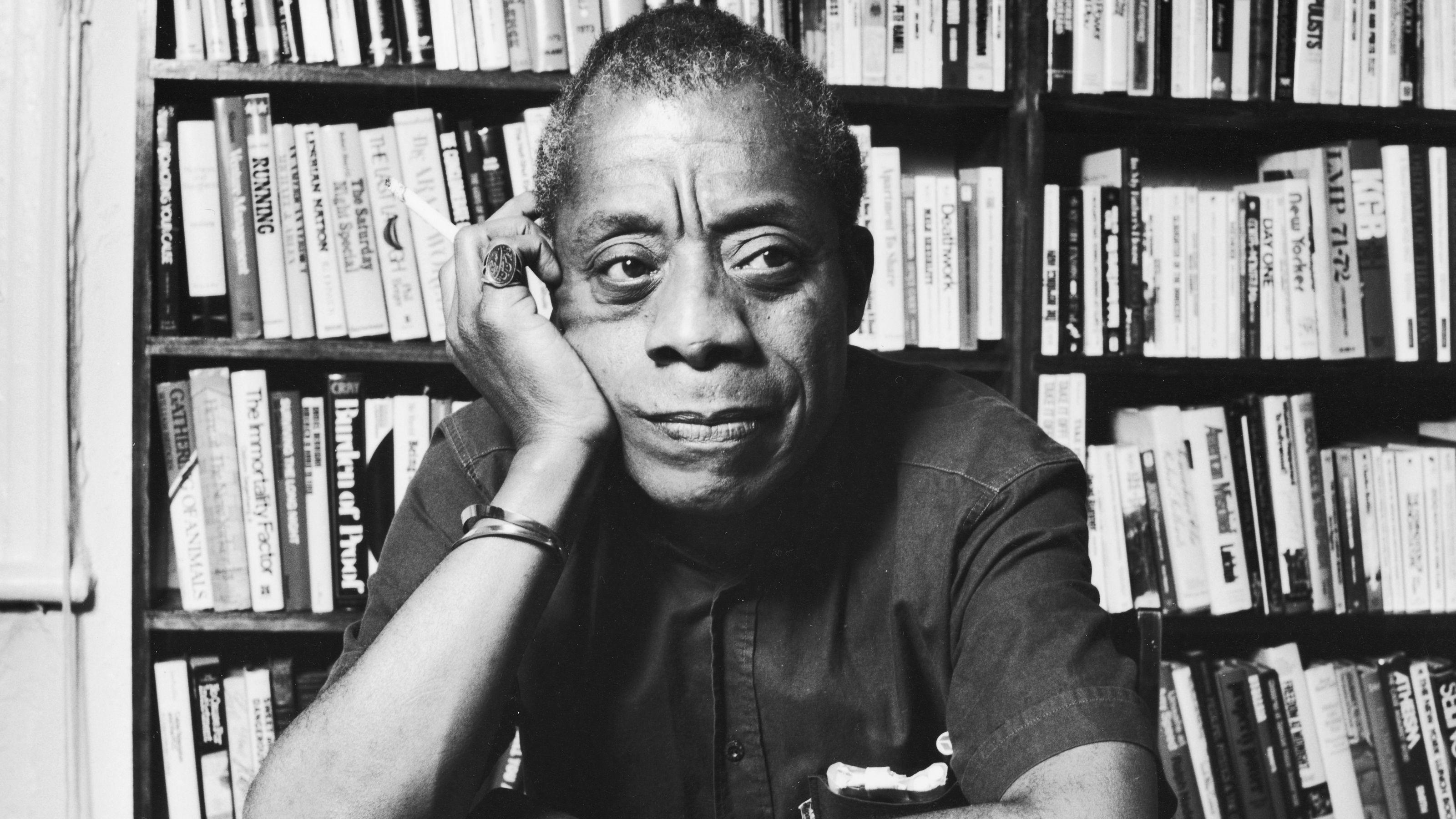
James Baldwin, a black writer from Harlem, was able to effectively criticize “Uncle Tom’s Cabin” with his own essay, “Everyone’s Protest Novel.” In it, he goes in depth as to what makes this novel so controversial. At one point, he compares the novel to white missionaries going on a trip to Africa. This shows that Baldwin thinks of this novel to be some type of “charity work” that is almost unnecessary. Rather than these white missionaries being able to truly help people in Africa, the only thing this really establishes is the fact that these white missionaries not only feel better about themselves for “helping” others, but also that they end up creating a framework of white people being superior to black people. The “what” of their mission trumps the “why” – which is what Claudia Rankine elaborates upon in her writing in “On Whiteness and The Racial Imaginary.”

Rankine writes, “Are we saying…  white writers can’t write black characters? That no one can write from a different racial other’s point of view? We’re saying we’d like to change the terms of that conversation, to think about creativity and the imagination… So, not: can I write from another’s point of view? But instead: to ask why and what for, not just if and how. What is the charisma of what I feel estranged from, and why might I wish to enter and inhabit it.” This means that rather than just absentmindedly write and feel, for some reason, “inspired” to make your character black as a white author, ask yourself, “what is the true purpose of making this character black?” If the author makes this character black, would this be diminishing the character into someone who is simplified into just a “black” person for the white person’s benefit, as Baldwin mentions in his writing? Would the character’s full reality as a black person be elaborated upon, or would the character’s race just add onto the reduction of actual peoples’ realities for the sake of making another (failed) protest novel? In combining the criticisms of both Rankine and Baldwin we learn to think more about how labeling a character as a person of color can be performative in nature and, more importantly, demeaning to real people; there is a line that must not be crossed in order to not make these errors.

However, this begs the question, what is the “line” that white writers cannot cross? What is the universally acceptable answer to the “why and what for” that Rankine mentions? If one person of color accepts the explanation, but another does not, should the black main character and his or her character development and struggles created by the white author be erased from the novel? While creative writing should not necessarily have boundaries, perhaps Claudia Rankine’s next steps could be to lay out a definite framework as to what is and is not acceptable for people to write about when it comes to creating a character of a different race – and perhaps someone will write another critical essay on her standards as well.

James Baldwin 1968 Interview on Race in America After Death of Martin  Luther King Jr.